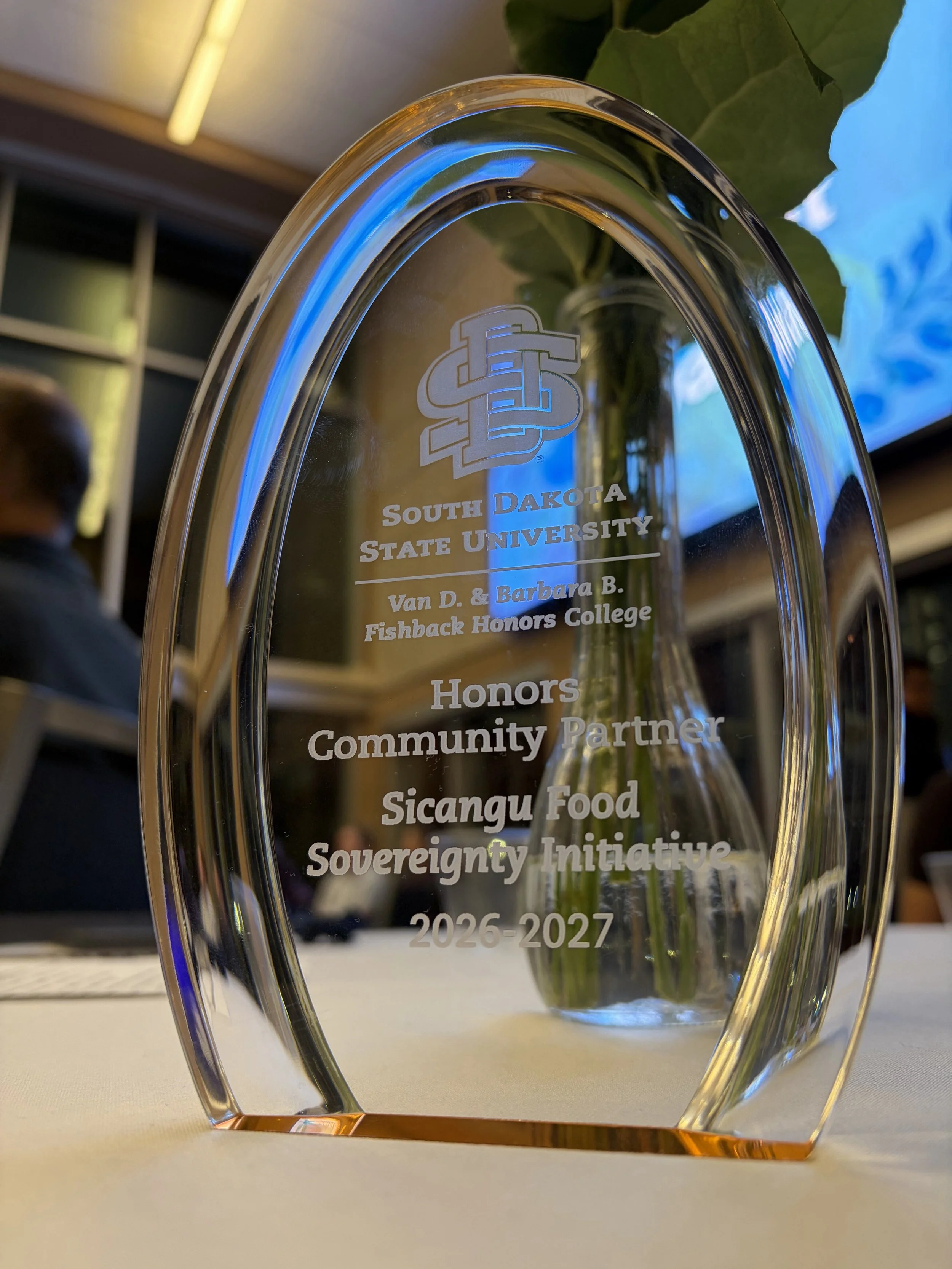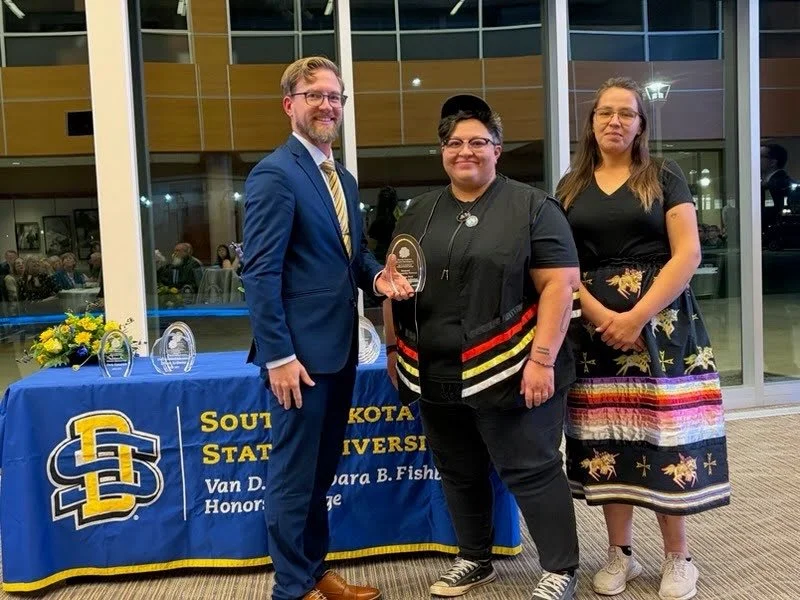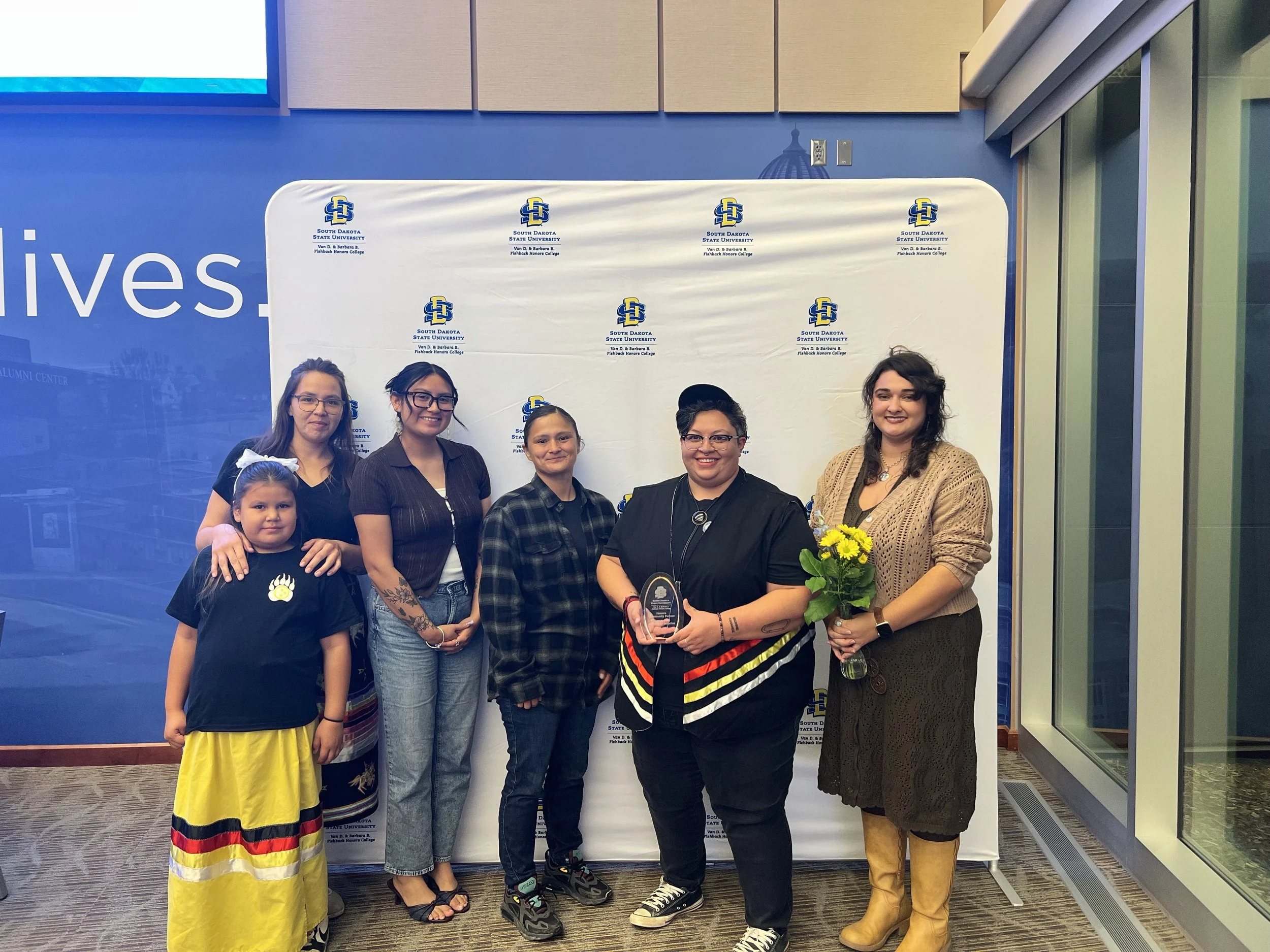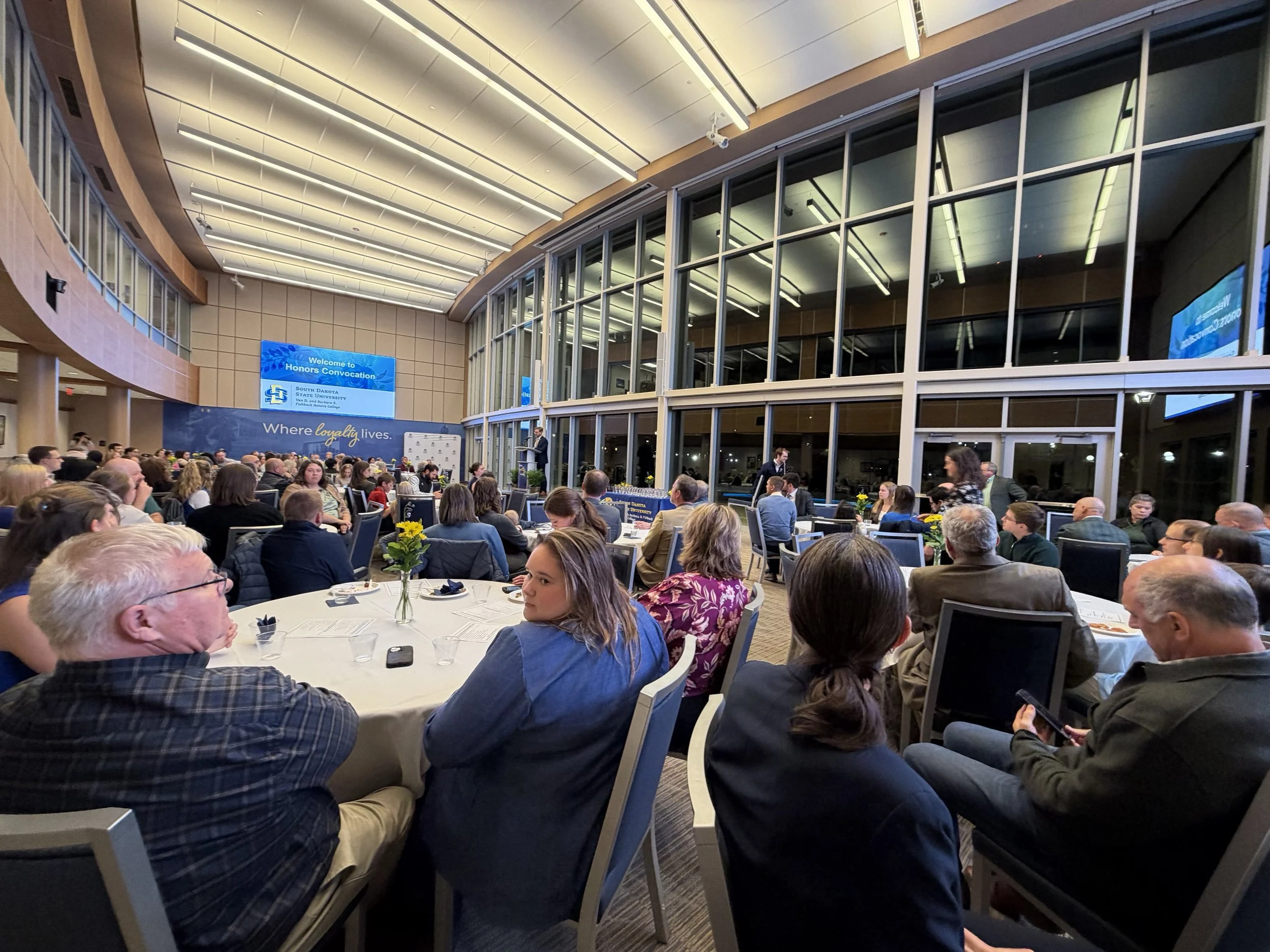
SIĊANĠU LAK̇OTA NATION, S.D. — South Dakota State University’s Van D. and Barbara B. Fishback Honors College has named the Siċaŋġu Food Sovereignty Initiative its 2026 Fishback Honors Community Partner. The award was presented on November 5th at the college’s annual Honors Convocation in Brookings, SD.
The recognition recognizes the Food Sovereignty Initiative’s (FSI) contributions to student learning at the Honors College. FSI welcomed students and faculty to Rosebud to learn about Indigenous food sovereignty the way it is practiced here: hands-on, alongside Siċaŋġu staff, youth, and families.
The partnership began following a presentation to SDSU Honors College faculty about the Siċaŋġu Co ecosystem and its food and agriculture work. As conversations about Indigenous food sovereignty continued among faculty, the Honors College reached out to FSI to arrange a visit for approximately 20 students as part of its 2026 Sustainable Agriculture Field Course.
The Honors College visited Rosebud twice in 2026, giving students and faculty opportunities to directly support food sovereignty activities in the community. During their first visit on May 13th, students worked at the Keya Wakpala Gardens, led a snack-making activity with students at Wak̇aŋyeja Ki Ṫokeyaḣc̄i (WKT), helped set up the first Siċaŋġu Harvest Market of the season, and supported the Relatives Feeding Relatives food distribution.
Students responded so well that the group returned in late October for the 2026 Siċaŋġu Food Summit. Over two days, they took part in a buffalo harvest and participated in hands-on sessions and presentations.
For Siċaŋġu CDC, the partnership is about more than one course. Indigenous food sovereignty means Native nations are deciding how their food is grown, harvested, shared and understood, and that also includes who teaches it and how it’s passed down. The SDSU students learned from Siċaŋġu people who are carrying this work forward on their own homelands, not from a textbook about Native people.
That shift matters across the region. Many SDSU students will go on to work in agriculture, health, education, and policy in South Dakota. Those fields directly shape and impact native food systems. The hope is that these students will carry this experience into their careers and see tribal nations as leaders in food sovereignty and land stewardship.
The partnership is also building capacity at home. While on campus for the convocation, FSI staff met with SDSU’s American Indian Student Center about connecting Native students living on Rosebud and who are enrolled in SDSU’s online programs. FSI hopes to be able to provide a path for students to strengthen food sovereignty at home, while they are earning their degrees.
“Food sovereignty isn't something that we can build alone. When visitors come here to learn from us, it strengthens our work and changes how the next generation of professionals in this state and beyond understand Native nations. Our goal is for people from Rosebud to be a part of the ones leading this work,” said Karen Moore, Food Sovereignty Director at Siċaŋġu CDC.
About Siċaŋġu CDC
Siċaŋġu Community Development Corporation (Siċaŋġu CDC) is a Native-led nonprofit organization and the community development arm of Siċaŋġu Co, an interconnected ecosystem of organizations working to advance the sovereignty, health, and prosperity of the Siċaŋġu Lak̇ota Nation. Through community-driven initiatives in education, language and cultural revitalization, food sovereignty, health and wellness, and housing, Siċaŋġu CDC works to strengthen community well-being, expand opportunities, and build a future rooted in the values, knowledge, and aspirations of the Siċaŋġu Lak̇ota people.