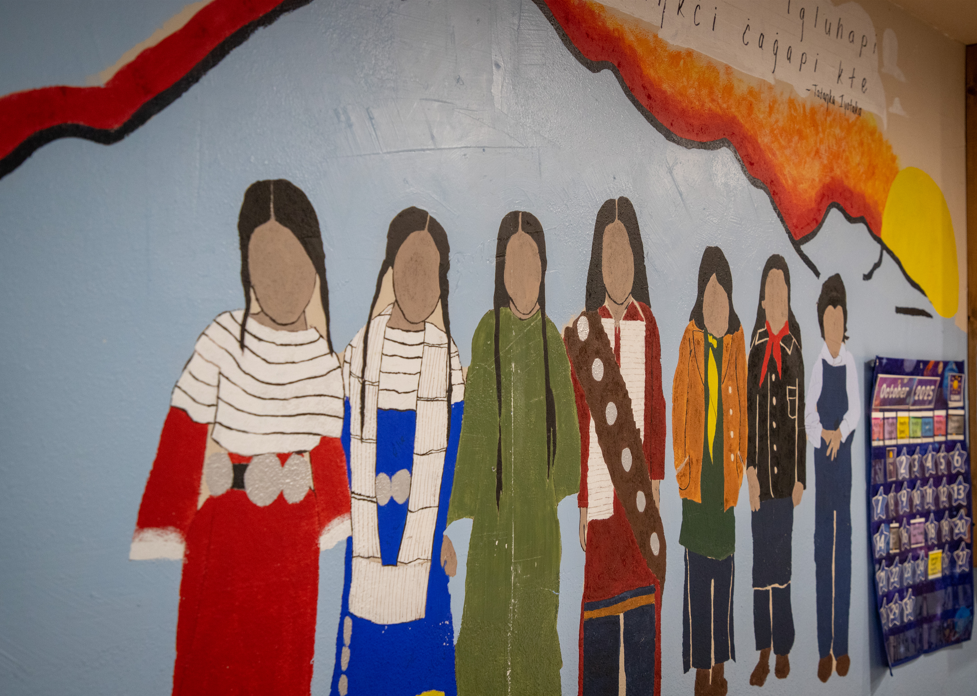
Cooking Up a Storm at Wak̇aŋyeja Ki Ṫokeyaḣc̄i!
Happy Wetú (spring) to everyone! We hope you’re enjoying the longer days and are beginning to see the signs of renewal and growth all around you.
One of the unique strengths of Siċaŋġu Co is our ability to work with various programs within our own ecosystem. This inherent partnership and collaboration help us deepen impact and provide a more holistic approach to the work of strengthening sovereignty.
In today's newsletter we're highlighting a new collaboration between Wak̇aŋyeja Ki Ṫokeyaḣc̄i and our Health and Food Sovereignty Initiatives.
First Family Cooking Class at Wak̇aŋyeja Ki Ṫokeyaḣc̄i!
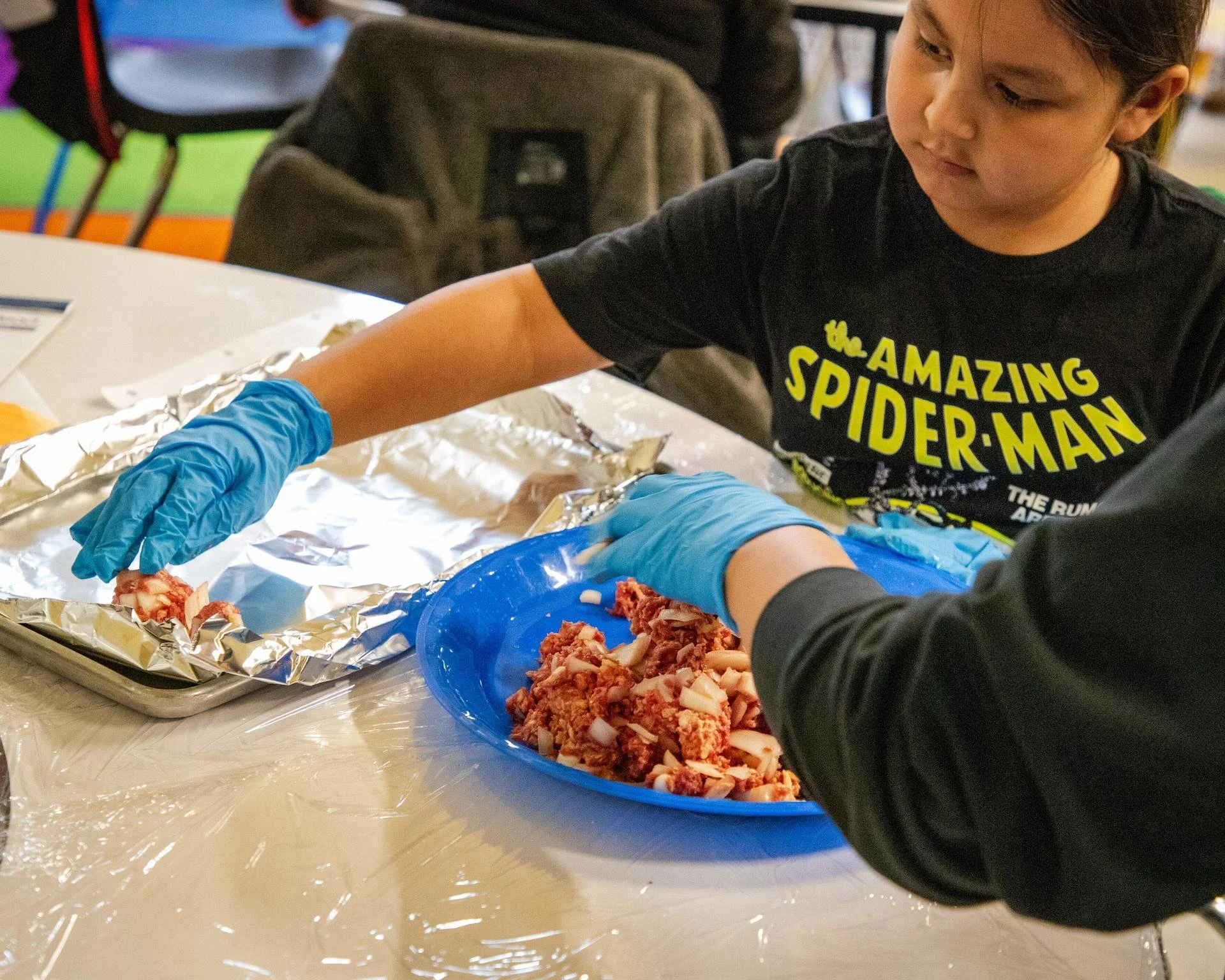
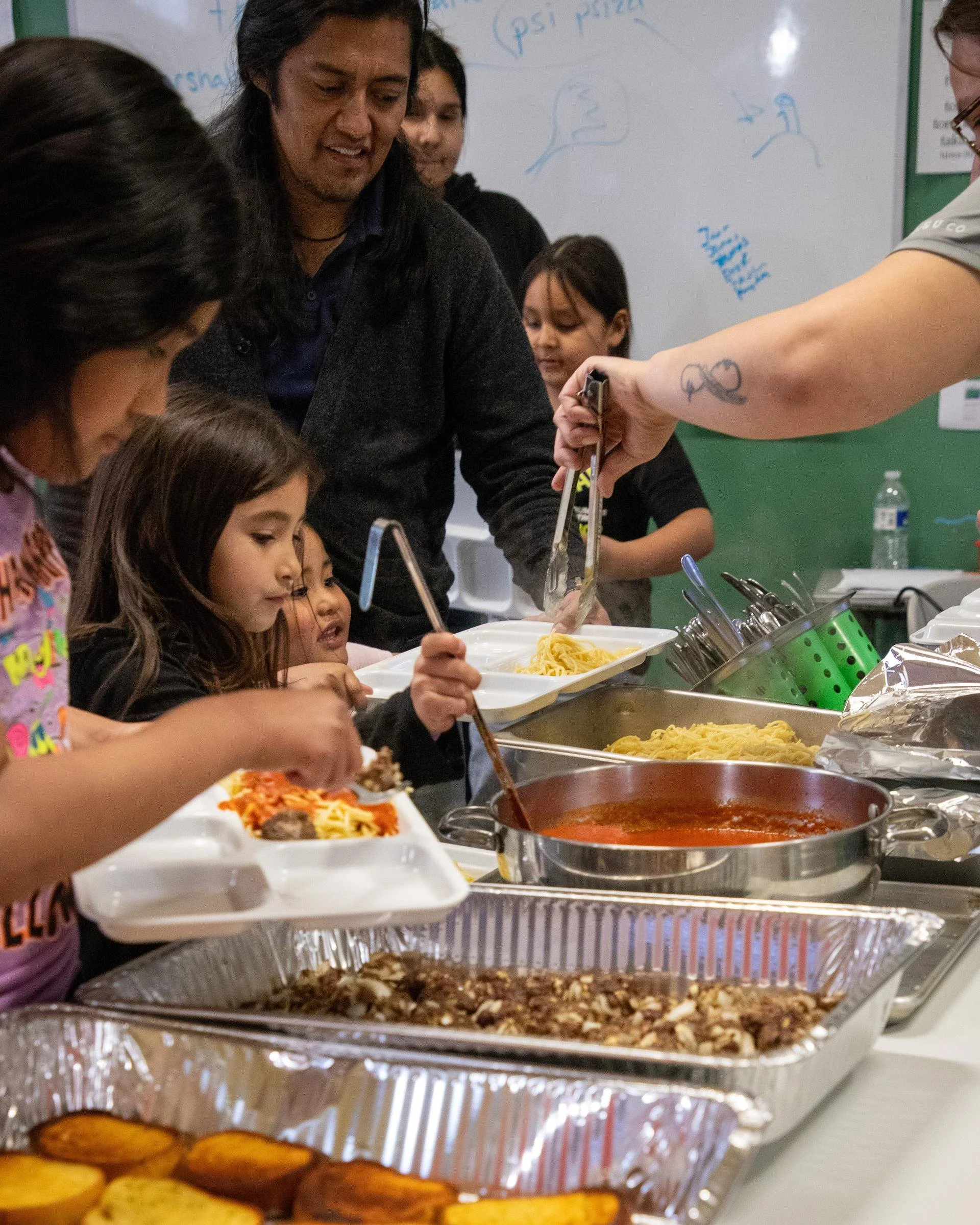
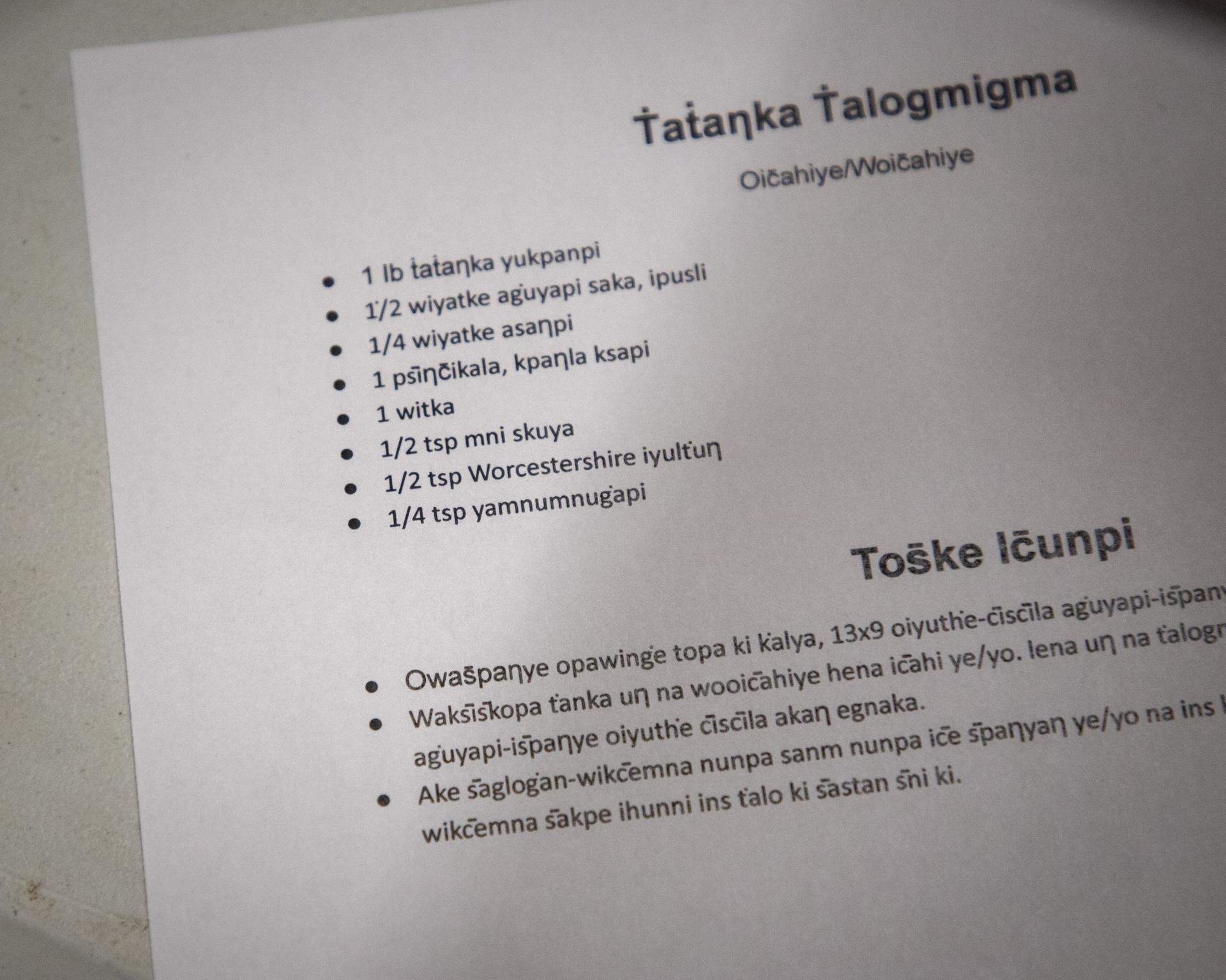
In March, Wak̇aŋyeja Ki Ṫokeyaḣc̄i collaborated with the Health and Food Sovereignty Initiatives to host our first cooking class specifically for students and their families! We made spaghetti with bison meatballs and a fruit salad. The bison meat came from the Wolak̇ota Buffalo Range, and the eggs were from the Food Sovereignty Initiative’s chickens.
Families worked together to make their own meatballs, mixing the ingredients and shaping them before being baked while staff made the spaghetti and the garlic bread. When the food was ready, families got to sit down and enjoy the meal together. In a day and age where there are so many demands on peoples’ time and energy and attention, being able to sit down, to visit, to breathe a bit, can be difficult to find.
This is what can make events like these so spei. Talking about the food – where it came from and how to prepare it with a good heart – is important. Teaching the Lak̇ota language – families followed a recipe written in Lak̇ota – is essential. But just as important is the time and space for families to come together, to spend time together and to cook and eat together.
As Lak̇ota, we believe that the health of the individual is inherently intertwined with the health of the family. For our students to grow and to thrive, we must also take care of their families. Over the last few years at Wak̇aŋyeja Ki Ṫokeyaḣc̄i, this has taken a variety of forms – some of our parents are coaches for the Lak̇ota Nation Invitational's Lak̇ota Language Bowl. We host parent nights that are language-learning focused. These cooking classes are another step in our evolution as a school, in what we do and how we do it.
Food is medicine. The meal program at Wak̇aŋyeja Ki Ṫokeyaḣc̄i is phenomenal - our students eat local and traditional ingredients that are thoughtfully and intentionally prepared every school day. This family-based program takes the infrastructure of Siċaŋġu Co, the foundation of the school’s meal program, and built-in community of parents/families and creates a program that will use food as a tool to create even greater change beyond the walls of the school.
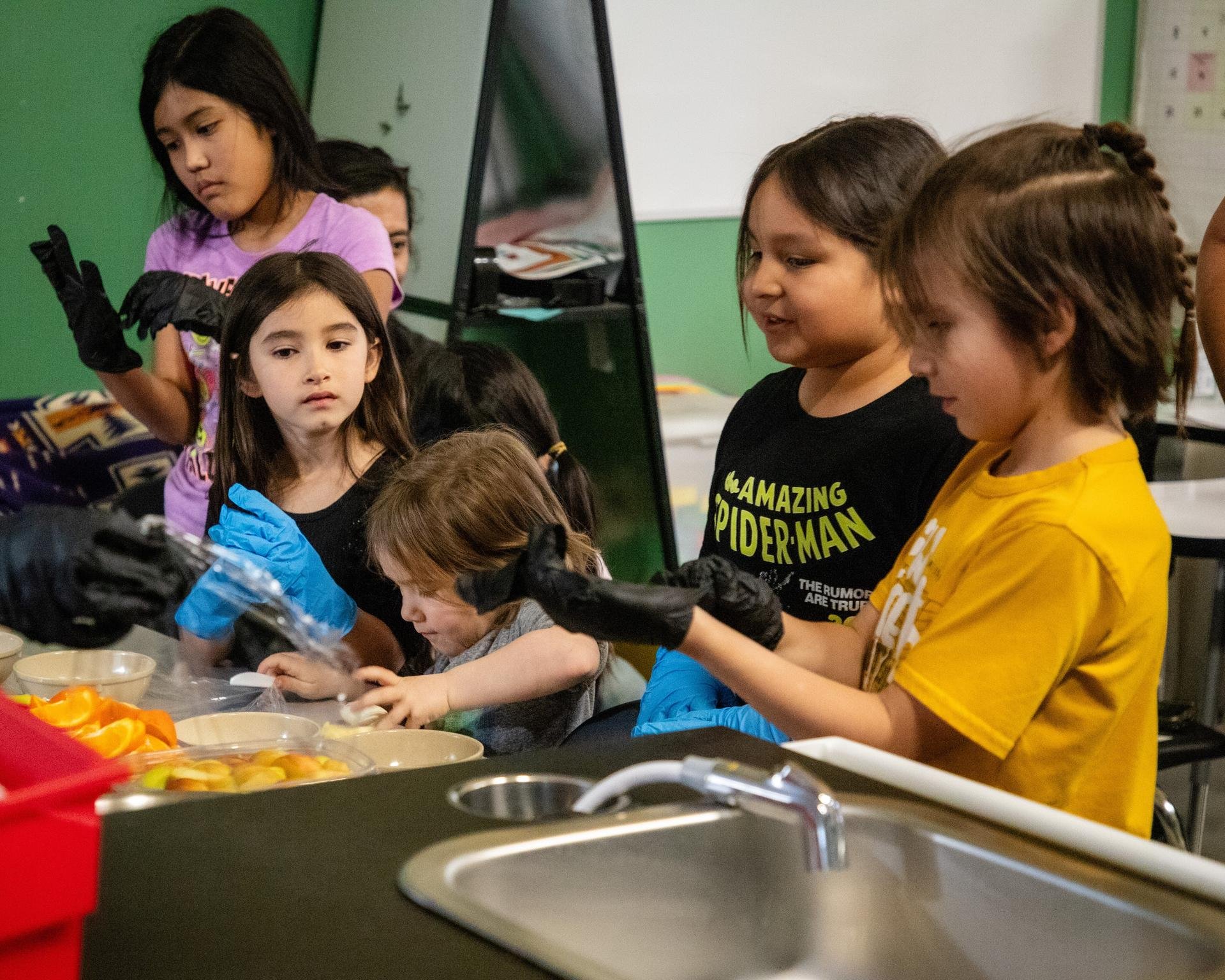
The cooking classes will expand on the meal program by bringing in parents, siblings, grandparents, aunties and uncles. The classes encourage active participation in the cooking process, not just passive (but enthusiastic) consumption.
Since it was the first cooking class event, our main goal was to engage with the students and their families. We have two more scheduled for the remainder of the school year, and we already have ideas of how we can make them better, including incorporating activities for while the food is cooking – it can be hard to sit there while smelling all the delicious ingredients! We’re so excited to be working with the Food Sovereignty and Health Initiatives, and to have this collective wisdom and knowledge available for our wak̇aŋyeja and their families.
P.S. For anyone who might be wondering – all the unused food was donated to the local shelter for our relatives who are experiencing homelessness.
Former Participant Finds Success at Science Fair
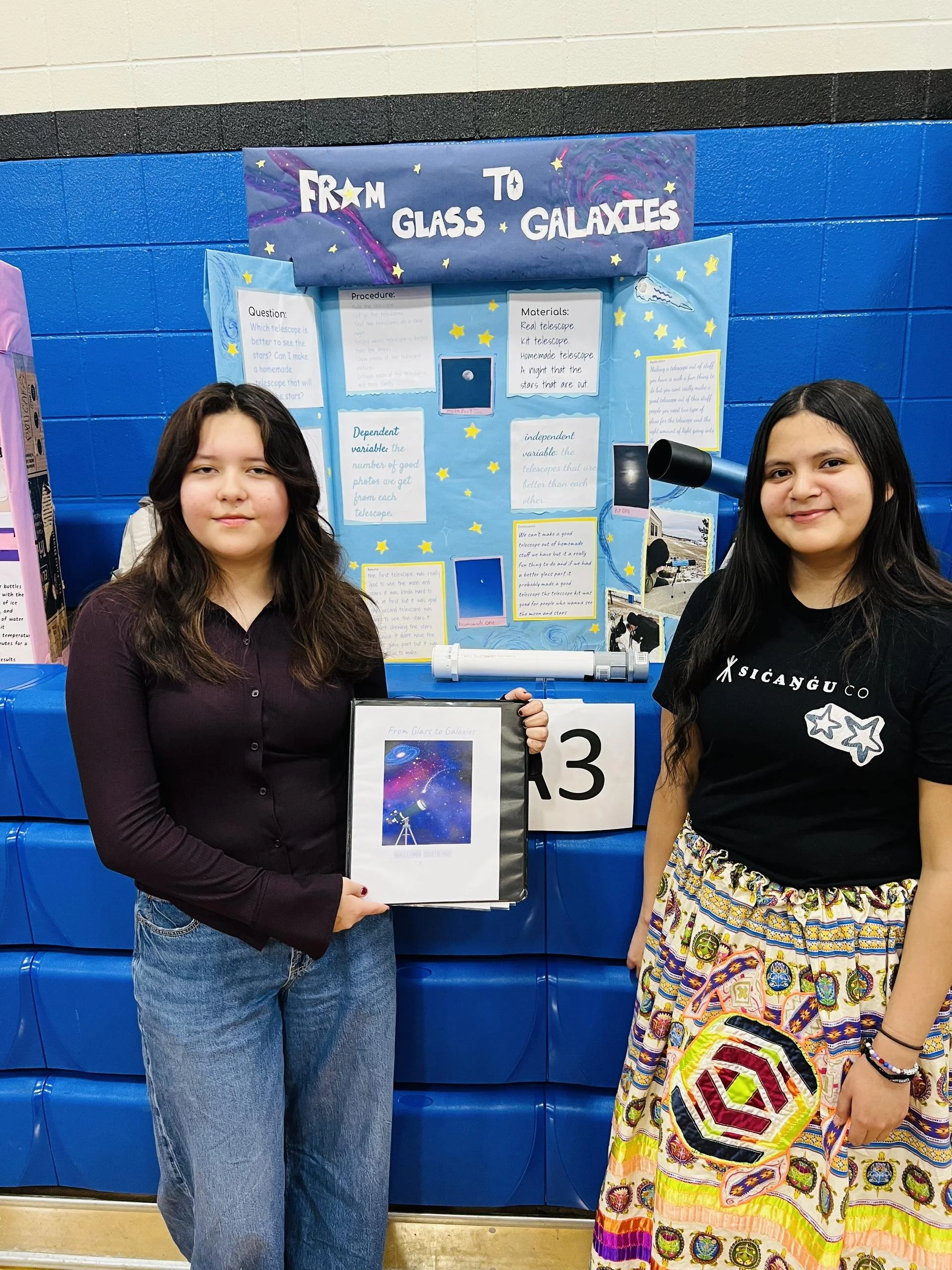
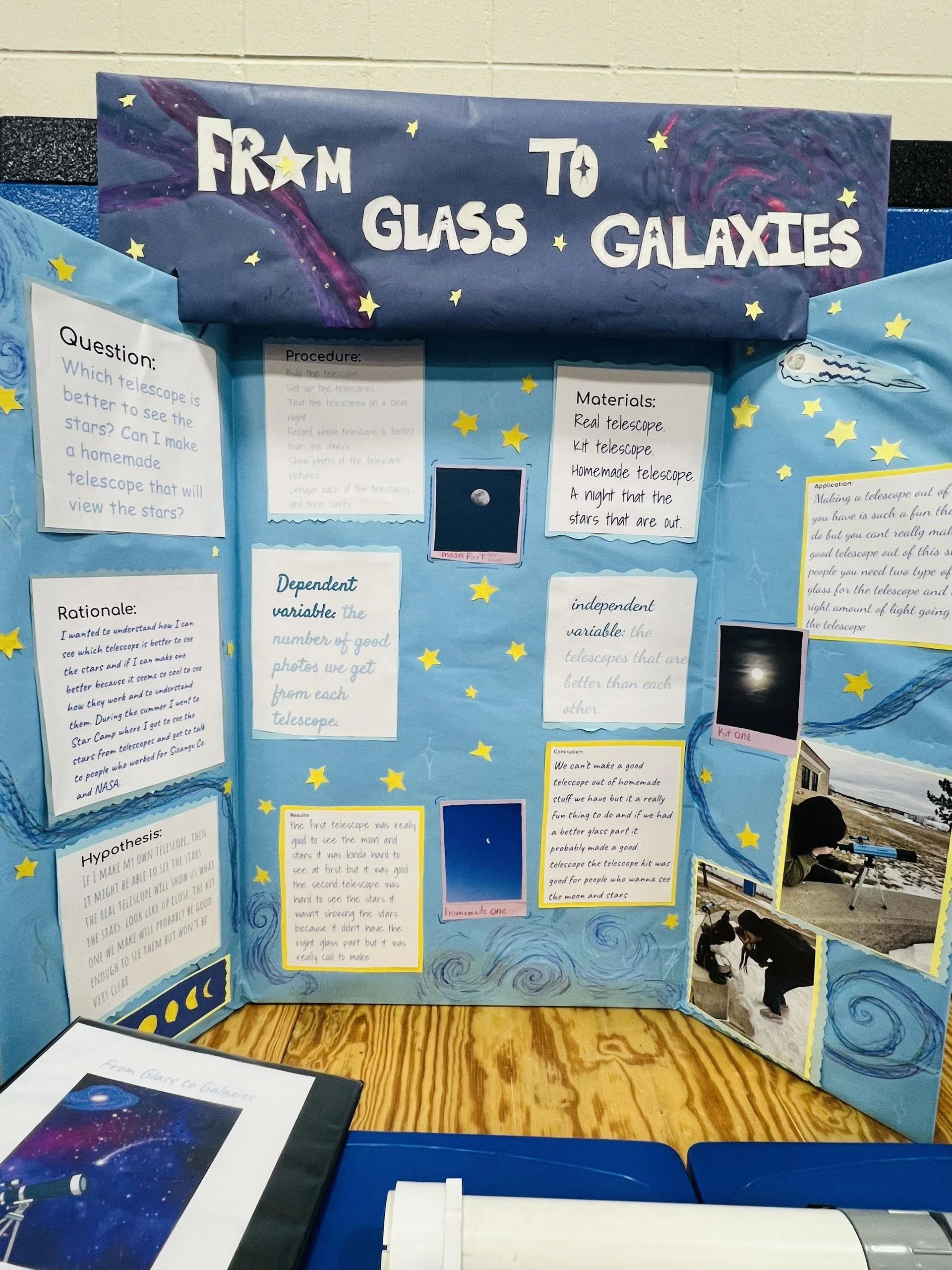
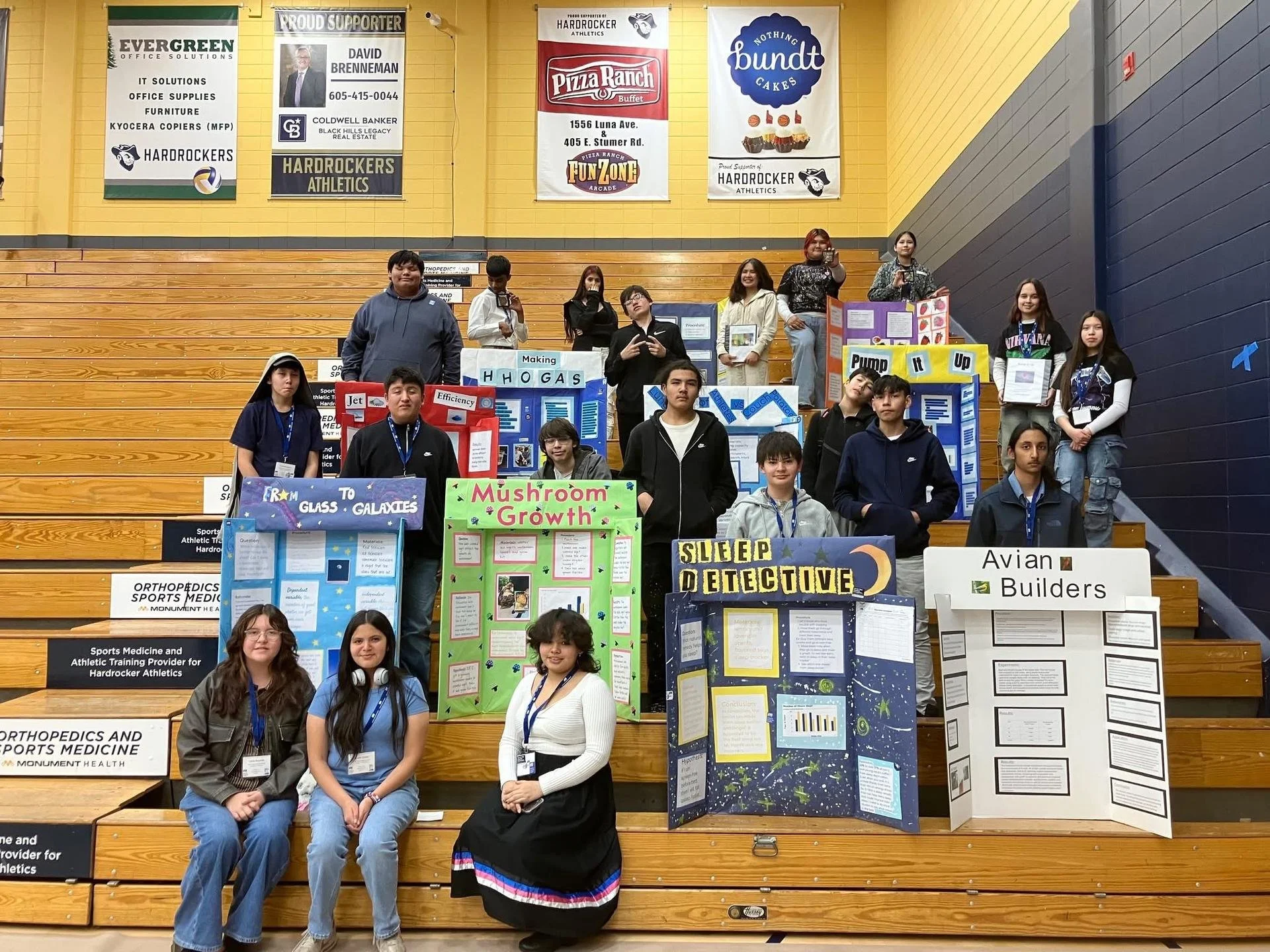
Using a telescope she built as a student in Sicangu Co's Star Knowledge Summer Experience, Rosie Zimiga qualified for the High Plains Regional Science Fair. Rosie -- alongside others from the Todd County School District -- travelled to the South Dakota School of Mines on March 24th to present her project.
Her project -- From Glass to Galaxies -- was inspired by her time in the program and her research explores how different types of telescopes view the sky.
This was a major "proud teacher moment" for us, as these are the types of outcomes that we envisioned when developing the Star Knowledge project in partnership with NASA.
This summer learning experience was created to enhance students’ awareness and understanding of the stars from both Western and Lakota perspectives. Through hands-on experiments, storytelling sessions, and field trips, students gained a deeper grasp of the science behind astronomy and traditional Lakota star knowledge—and how both can shape their lives, learning, and futures.
Applications have already closed for the 2026 program, but we look forward to welcoming students from grades 6-12 into the program again this year!
For Lydia Yellow Hawk, Education Outreach Coordinator at Sicangu Co, this work fills a gap she experienced in her own education:
“I went to school on Rosebud. I never saw our knowledge in the classroom much. Star stories were something I heard at ceremonies or family gatherings—not through lessons or textbooks. That’s why this program matters.”
Congratulations to Rosie and all of the emerging Indigenous scientists!
Carry the Future Forward
For generations, our people have planned with the next seven generations in mind; making choices today so our language and way of life continue to live on.
At Wak̇aŋyeja Ki Ṫokeyaḣc̄i, that future is already here. Our children are learning, speaking, and growing in Lak̇ota every day. But schools like this, rooted in language, culture, and identity, are still rare, and too often go underfunded because they don’t fit within traditional systems.
What we are building is powerful, but it also requires long-term care and commitment to ensure it lasts.
By including Siċaŋġu Co in your will or trust, you can help protect and sustain this school for generations to come, so that Lak̇ota language and lifeways remain strong long into the future.